
LOS ANGELES – The NBA locker room has always been a place where the future shows up early — new stars, new systems, new styles of play. But with Metta World Peace, it feels like the future of sports business has arrived in a different form altogether.
World Peace, the former NBA champion with the Los Angeles Lakers, isn’t just thinking about basketball anymore. As Chairman and Co-founder of 37 Partners, he’s stepping into the rapidly evolving world of artificial intelligence and digital identity.
Alongside CEO and Co-founder Matthew Heller and investor Stephen Stokols, World Peace is launching Perpetual Celebrity Commerce (PCC) — a platform designed to let celebrities deploy officially licensed AI-powered digital likenesses for global fan engagement and live commerce.
And the first test run is happening halfway across the world.
Metta’s AI digital likeness will debut on Shopee, one of Southeast Asia’s largest e-commerce platforms, where his digital twin will host livestream commerce sessions, interact with fans, and speak multiple languages in real time.
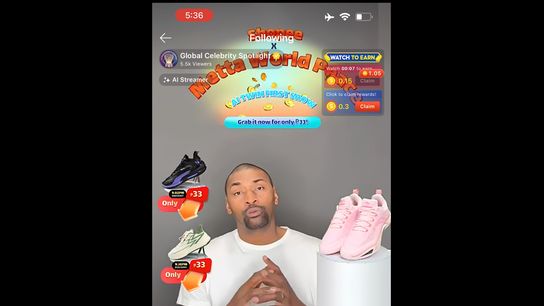
Photo Credit: 37 Partners
For Heller, the concept was born from a simple reality many athletes face.
“So what we're launching is what we call a perpetual celebrity commerce platform,” Heller told me during our sit-down conversation. “We’re kicking it off with Metta’s AI digital likeness — basically a digital version of himself that he has full control over, full say in what happens to it, how it's used and deployed.”
Heller described Shopee as essentially “the Amazon of Asia.” In 2024 alone, the platform held roughly 52% of Southeast Asia’s e-commerce market — a massive digital marketplace where live-stream shopping has become part entertainment, part retail.
In that world, an AI-powered version of Metta World Peace can appear instantly, host product launches, talk to fans, and interact with customers — all without stepping on a plane. For athletes accustomed to the grind of travel schedules, endorsement appearances, and international obligations, the traditional system has always come with logistical friction.
Heller laid out the math.
“If a company wants to use Metta, they’d have to fly him out. Now the budget increases. He loses a day to time zones. They’re paying for hotels, travel, studios. It throws up barriers immediately.”
Language barriers create another layer of distance.
Many global fans want to connect with their favorite athletes, but that connection doesn’t always translate across cultures or languages. The PCC platform aims to bridge that gap by enabling AI-powered likenesses that can speak to fans locally, in their own language. In the age of deepfakes and synthetic media, the platform also addresses a growing concern in entertainment and sports: ownership of digital identity.
The rise of AI-generated voices, faces, and avatars has made it easier than ever to replicate someone without permission. PCC’s framework flips that dynamic — allowing athletes and entertainers to authenticate and license their own digital presence, protecting their brand while monetizing it.
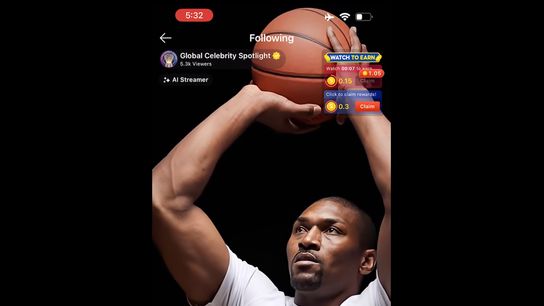
Photo Credit: 37 Partners
World Peace believes the timing couldn’t be better.
“In my career, I have seen how global demand can be real while access is still limited by bandwidth, time zones, and travel,” World Peace said in a statement. “This is a way to show up with consent, with control, and with accountability.”
For World Peace, Southeast Asia — particularly the Philippines — represents an ideal proving ground.
“When you look at the Chinese and Filipino market, the Philippines are probably the best basketball fans in the world,” he said. “The second longest-reigning basketball league outside of the NBA is in the Philippines.”
Investor Stephen Stokols sees the opportunity in even simpler terms: scale.
“Metta’s going to be sleeping generating revenue,” Stokols said with a laugh. “He’ll wake up and see how much he generated, go back to bed again, wake up the next day.”
The bigger picture, he says, could redefine the economics of celebrity.
“You go 18 to 24 months — this will already be the future in China,” Stokols said. “Commerce there is almost a trillion-dollar industry next year. China is always a couple years ahead of the U.S. and Europe, but this thing is going to be massive.”
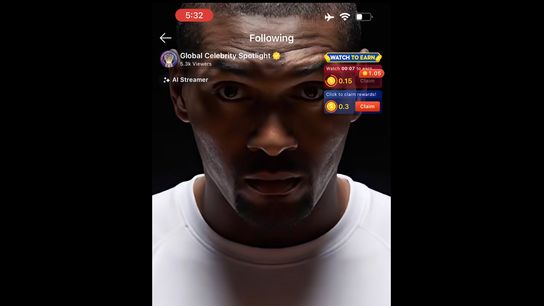
Photo Credit: 37 Partners
According to Stokols, the model could allow athletes and entertainers to potentially double or triple their current endorsement earnings while drastically reducing travel obligations.
“It’s going to give celebrities more revenue and way more personal time. That combination gets me excited.”
For World Peace and Heller, the partnership behind 37 Partners came together in an unlikely place: LinkedIn.
World Peace had been actively building connections and sharing business ideas online when Heller reached out.
“I was posting a lot, building up our team, trying to connect with people,” World Peace said. “When I got his message and we met, we just saw the perfect synergy.”
Heller quickly realized World Peace wasn’t just another retired athlete exploring business.
“We knew we wanted to do something with celebrities in sports,” Heller said. “But we also wanted someone who was a celebrity in China. Metta has been there 50 times. Very few athletes have that kind of understanding.”
Despite diving into tech entrepreneurship, World Peace still keeps a close eye on the NBA — especially his former team in Los Angeles. When asked about the current state of the Los Angeles Lakers and the evolving competitive landscape around stars like LeBron James and Luka Dončić, World Peace didn’t sugarcoat the challenge.
“The Lakers are still alive and well,” he said. “But it’s hard in this league if you don’t have a guy like Victor Wembanyama. If you don’t have a Shai Gilgeous-Alexander or an Anthony Edwards, it’s going to be difficult.”
He added:
“We got Luka, but the league is very competitive. It’s a global game now. So the Lakers organization has their work cut out for them.”
Jessica Cryderman - The Sporting Tribune
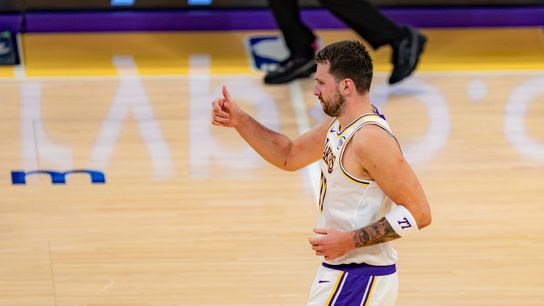
Los Angeles Lakers guard Luka Doncic (77) celebrating an assist during an NBA basketball game against the Sacramento Kings on March 1st, 2026 in Los Angeles, CA.
World Peace also reflected on the franchise’s historic sale — when the Buss family agreed to sell the team to Mark Walter for a reported $10 billion.
“Dr. Buss made a great investment for his family,” World Peace said, referencing legendary Lakers owner Jerry Buss. “He set his family up for generations.”
The NBA has always been about evolution — faster offenses, global talent pipelines, analytics reshaping strategy. Now, players like World Peace are betting the next revolution won’t just happen on the court.
It’ll happen in the cloud. The next generation of athlete endorsements may not require an airport at all.
