
LOS ANGELES — Alex Rodriguez spent more than two decades playing Major League Baseball, earning hundreds of millions of dollars and winning a World Series championship with the New York Yankees. These days, the 14-time All-Star has found a second career as a sports team owner, investor, broadcaster and media personality, giving him a unique perspective on the rapidly changing business of professional sports.
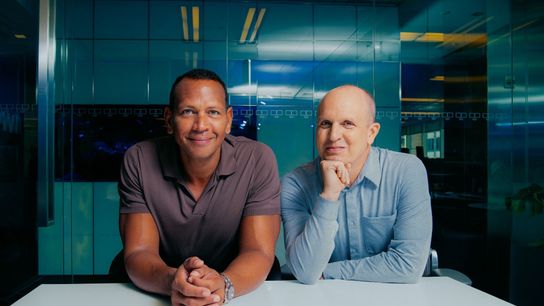
Rodriguez and Bloomberg journalist Jason Kelly will return for the fourth season of their Bloomberg Originals series, "The Deal with Alex Rodriguez and Jason Kelly," on Thursday. The show explores the intersection of sports, business, media and culture, featuring conversations with some of the most influential figures shaping the industry.
In an exclusive interview with The Sporting Tribune, Rodriguez and Kelly discussed everything from skyrocketing NBA franchise valuations and the possibility of expansion into Las Vegas to baseball's growing economic disparity, the looming labor negotiations that could result in a work stoppage and the uncertain future of sports journalism.
Perhaps the most pressing issue facing professional sports is the widening financial gap between baseball's richest and poorest franchises, particularly as the Los Angeles Dodgers continue to flex their financial muscle while pursuing a third consecutive World Series championship.
Rodriguez, who played for the Seattle Mariners, Texas Rangers and Yankees during his 22-year major league career, believes the Dodgers have become the modern version of the Yankees dynasty that won four championships in five seasons from 1996 to 2000. The Dodgers have so far won three championships in six seasons from 2020 to 2025.
"The Dodgers remind me of the late '90s New York Yankees," Rodriguez told The Sporting Tribune. "They've got the best people maybe in all sports on and off the field. It's not just about whether or not they win this year. It's about sustained success."
Rodriguez praised the Dodgers' combination of financial resources, player development and organizational leadership, arguing that the franchise has mastered something other big-market teams sometimes struggle to accomplish: using its financial advantages without sacrificing intelligence or discipline.
"They're richer than you, they're smarter than you, they're better than you and they win," Rodriguez said. "Really simple. I think the mistake is when you're in a big market like the Dodgers, when you try to be better but you get cute. That's not your game. They know how to win."
The Dodgers' success, however, has intensified questions about whether baseball's economic system is sustainable. While teams such as the Dodgers generate enormous revenue through regional television contract, sponsorships and attendance, smaller-market franchises operate with a fraction of those resources.
Rodriguez pointed to the disparity between the payrolls of the two teams playing in the ALC, the Tampa Bay Rays (25th in MLB at $98.3 million) and Cleveland Guardians (30th and last at $74.2 million) and the Dodgers (2nd at $338 million) as an example of a financial divide that could eventually become impossible for the sport to ignore. The Milwaukee Brewers, one win away from sweeping the Dodgers in the NLCS, are 19th at $143.5 million.
"You've got a team in Tampa that's going to probably do somewhere around about $150 million of top-line revenue compared to a team that's going to do over a billion dollars of revenue," Rodriguez said. "At some point, those things can just keep getting wider and wider and it's not going to be good for the sport."
Those concerns come as Major League Baseball approaches the expiration of its collective bargaining agreement following the 2026 season, raising the possibility of another labor stoppage. The sport's last work stoppage was a 99-day lockout that delayed the beginning of spring training in 2022.
One of the biggest potential sticking points is whether baseball should implement a salary cap, something the MLB Players Association has historically opposed.
Kelly believes baseball eventually needs to adopt a system similar to those used in the NFL, NBA and NHL to create greater competitive balance and improve the long-term financial health of the sport.
"I think there has to be a salary cap," Kelly told The Sporting Tribune. "I do think, and I think they will get there, cooler heads will prevail and understand that a salary cap has worked in every other sport and that ultimately it will raise a lot more boats."
Kelly acknowledged that the highest-paid players might have to make concessions but believes a different economic structure could ultimately benefit the majority of major leaguers.
"Yes, there will be some pain, and I say that with quotation marks, maybe from the very, very tippy-top players, but for the rank-and-file players, it ultimately will be good," Kelly said.
Rodriguez, who was a longtime member of the players' union, was more cautious about explicitly endorsing a salary cap. He emphasized that any solution must benefit both players and owners while increasing the overall revenue generated by baseball.
"I was a member of the union for almost 24 years," Rodriguez said. "I'm never gonna say anything against players. But what I do think, they have to figure out a way, and there's people that are a lot smarter than me, to figure out how to get this great game that's been around for 140 years and raise the revenue and find a way for both the owners and the players to perhaps make more and grow the pie."
Rodriguez suggested that part of the problem could be how a potential salary cap is presented to players, particularly when other professional leagues have seen significant increases in player compensation while operating under salary-cap systems.
"The issue sometimes is English, not math, and then we have to be able to tell a better story," Rodriguez said.
Despite baseball's economic challenges, Rodriguez believes MLB franchises might represent the best investment opportunity in American professional sports.
While NBA franchise valuations have soared into the billions, including the Lakers' record-setting sale for $12.5 billion, baseball teams generally command lower revenue multiples than their basketball counterparts. The Angels recently sold for a record $4 billion.
Rodriguez believes those lower valuations overlook one of baseball's greatest assets: its enormous inventory of live programming with 162 regular season games.
"If media is king, then baseball should be king because they provide more content than anyone, more predictable content," Rodriguez said. "You can make an argument that Major League Baseball is incredibly underpriced. With all that said, I think of all the major top four sports in America, I think the greatest value today, value buying, is baseball."
Kelly agreed that baseball has considerable upside but noted that uncertainty surrounding its labor situation and the ongoing disruption of regional sports television networks has made some investors cautious.
"Investors love stability and predictability, and baseball at this moment, it's got a labor problem," Kelly said. "That's not a secret. It's got some lumpiness when it comes to media and what's happened over the past few years with regional networks versus national media streaming."
The contrast between baseball and basketball is particularly striking to Rodriguez, who is now a controlling owner of the Minnesota Timberwolves and Minnesota Lynx.
The NBA's soaring valuations have raised questions about how much investors might be willing to pay for expansion franchises, particularly in Las Vegas, where a potential NBA team could command a price approaching $12 billion to $13 billion.
Rodriguez declined to weigh in directly on the potential price of a Las Vegas franchise because of his position as an NBA owner, but he emphasized the scarcity of professional basketball franchises and the cultural influence of the league.
"You only have 30 franchises," Rodriguez said. "If you're in real estate, think about only having 30 waterfront properties around the world. Incredible IP."
Kelly pointed out that investors have repeatedly questioned the prices paid for professional sports franchises, only to see those investments appreciate dramatically.
He cited the Dodgers' $2 billion sale in 2012, Steve Ballmer's $2 billion purchase of the Clippers in 2014 and Jerry Jones' acquisition of the Dallas Cowboys for approximately $140 million in 1989 as examples of transactions that initially appeared expensive but ultimately proved extraordinarily lucrative.
"Until I think we see evidence to the contrary of the value of media rights slowing down dramatically, the growth slowing down dramatically, or fans suddenly aren't showing up, especially for the core franchises where the media rights are well established and sort of defensible, these valuations are going to hold," Kelly said.
Las Vegas has emerged as one of the most intriguing markets in professional sports, transforming from a city without a major professional sports franchise about a decade ago into the home of the NHL's Golden Knights, NFL's Raiders and WNBA's Aces, with Major League Baseball's Athletics scheduled to join them in 2028 in a $2 billion stadium currently being built on the Las Vegas Strip.
The prospect of adding an NBA franchise has created questions about whether the market can sustain another major professional team, particularly at a multibillion-dollar valuation.
For Rodriguez, the broader appeal of professional sports ownership extends beyond the financial opportunity. He said he has become deeply invested in the day-to-day operations of the Timberwolves and Lynx and isn't necessarily looking to expand his portfolio of franchises.
"You never say never, but I'm a big believer, and I've been taught by some great mentors, that you don't want to be an entrepreneur that's wide and shallow," Rodriguez said. "You really want to be narrow and deep."
Rodriguez said that despite spending six years involved in NBA ownership, he still considers himself a student of the business.
"I feel like I'm in the early innings of my learning curve," Rodriguez said. "But I have an incredible amount of passion, and I love it. I love our athletes, I love our players, I love our coaches. And we have a real responsibility as fiduciaries to our fan base, which is incredible."
That curiosity is also what led Rodriguez and Kelly to create "The Deal."
Bloomberg
October 14, 2026– Bloomberg Media today announced that the Bloomberg Originals series The Deal with Alex Rodriguez and Jason Kelly returns Thursday, October 15 with co-founder and CEO of Dynasty Equity, Don Cornwell.
The two initially worked together on Bloomberg's documentary series "Athlete Empire," which featured Rodriguez in its pilot episode. They developed a friendship and eventually began discussing the changing landscape of sports, business and media during a lunch at Rodriguez's office in Miami in early 2023.
What began as a casual conversation about potential projects eventually became the foundation of their show.
"We were literally sitting and having lunch at ARC headquarters at Alex's office, and we just started kind of jamming on all the things that were happening at the intersection of sports, business, culture, media," Kelly said. "And thought, this is a show."
Rodriguez said they initially considered writing a business book or developing a philanthropic project before realizing their conversations could become a podcast.
"We were talking about sports, media, culture, like where's it going?" Rodriguez said. "It feels like 50 years of changes in the landscape of media, both at a local level, regional, international and global rights. Jason at one point said, 'This is the show. We should do a podcast that just sounds just like this.'"
The show has since featured conversations with some of the biggest names in sports business, including Cowboys owner Jerry Jones, while giving Rodriguez an opportunity to learn from executives, entrepreneurs and investors across different industries.
Rodriguez said his interest in business dates to a conversation with Lakers legend Magic Johnson, who provided him with a blueprint for transitioning from professional athlete to successful entrepreneur.
"He kind of gave me his blueprint, and we had about a three-and-a-half-hour meeting over dinner, and I still have the blueprint," Rodriguez said. "I took nine pages of notes."
Seeing Johnson successfully transition from basketball to business helped Rodriguez envision a similar future for himself.
"When I saw a man of color that was great on the basketball court and took those talents to the boardroom, it gave me hope," Rodriguez said. "You think, 'Oh my God, if Magic can do it and Michael can do it, why not?'"
For Rodriguez, who also works as a baseball analyst for Fox Sports, the opportunity to continue learning has become more important than financial compensation.
"I'm a fan myself," Rodriguez said. "I love content, I love smart people, I love to educate myself, and I love sharing ideas."
He said his relationships with Kelly and his Fox colleagues Derek Jeter, David Ortiz and Kevin Burkhardt have made those broadcasting opportunities particularly rewarding.
"I'm not going to do something to chase money," Rodriguez said. "I'm doing things because it fills my heart."
The conversation eventually turned to another industry facing significant disruption: sports journalism.
While professional sports franchises have never been more valuable, traditional sports media outlets have faced widespread layoffs, shrinking newsrooms and the elimination of sports departments at newspapers across the country such as the Washington Post.
The Sporting Tribune asked Rodriguez and Kelly how sports journalism can survive in an environment where teams and leagues have increasingly developed their own media platforms and can communicate directly with fans without relying on traditional reporters.
Rodriguez believes there will always be demand for elite journalists, even if the platforms they use to reach audiences continue to change.
"I think the elite journalists are going to live forever," Rodriguez said. "They might do it through different mediums. It might be a little bit less writing but they will still be important."
He pointed to Bill Simmons, who transitioned from writing columns to building one of the most successful podcasting businesses in sports, as an example of how journalists can adapt.
Rodriguez also cited Pablo Torre's investigative reporting as evidence that original journalism can still command attention in a crowded media environment.
"What I see is less people doing hard journalism, like Pablo Torre, for example," Rodriguez said. "Less of that. And I think people are reacting to investigative work or great journalism, and they're talking about the great journalism versus going out there and hunting for great stories. That's where I see the big difference."
Kelly, who began his career in newspapers before expanding into television, radio, podcasts and books at Bloomberg, believes the next generation of journalists will need to be more entrepreneurial and versatile than previous generations.
"I think you probably have to be, for lack of a better term, more of a hustler than you used to be," Kelly said. "I think you have to be very, to Alex's point, nimble in terms of platform and be able to storytell in lots of different formats."
Kelly also sees significant opportunities for journalists willing to explore stories that historically received limited coverage, particularly in women's sports.
"There is this entire world of women's sports, of untold stories," Kelly said. "Both the stories of the players themselves, but also the stories of the franchises, the stories of the owners, all these different things."
Despite the challenges facing traditional news organizations, Kelly believes the demand for compelling storytelling will ultimately create new opportunities for journalists.
"I think we're going to have a renaissance," Kelly said. "It feels bad now, but I do think we will find new and different ways to tell stories, we always do."
Rodriguez closed the conversation by emphasizing that although technology and distribution platforms will continue to evolve, the fundamental principles of journalism remain unchanged.
"When you talk about work ethic, integrity, character and responsibility, and most importantly, tripling down in your relationships, those are evergreen and those will never go away," Rodriguez said.
For Rodriguez and Kelly, those principles are also central to the continued success of "The Deal," a show built on relationships, curiosity and the belief that the business of sports has become just as compelling as the games themselves.