
LOS ANGELES - Mick Cronin has been a fixture of UCLA basketball since he was brought in as the head coach in 2019 and since then, he’s never failed to drum up publicity.
He’s never been one to hide his opinion and keeping with that policy he’s found himself at the center of attention, for better and for worse, often. He’ll call players out by name, go after the Big Ten for scheduling plans that send his team across the country and openly despair about the state of college sports, depending on the day or the issue.
“He’s intense. He brings it everyday. Coach Cronin has got no off days. He is who he is every single day and you’ve got to respect that," senior forward Tyler Bilodeau said after UCLA's March 7 win over USC.
What can sometimes get lost in Cronin’s bluster is the real message in his words, that being that he truly loves the game of basketball and above all else, he’s concerned about his players as people just as much, if not more, as he’s concerned with what they can do on the court.
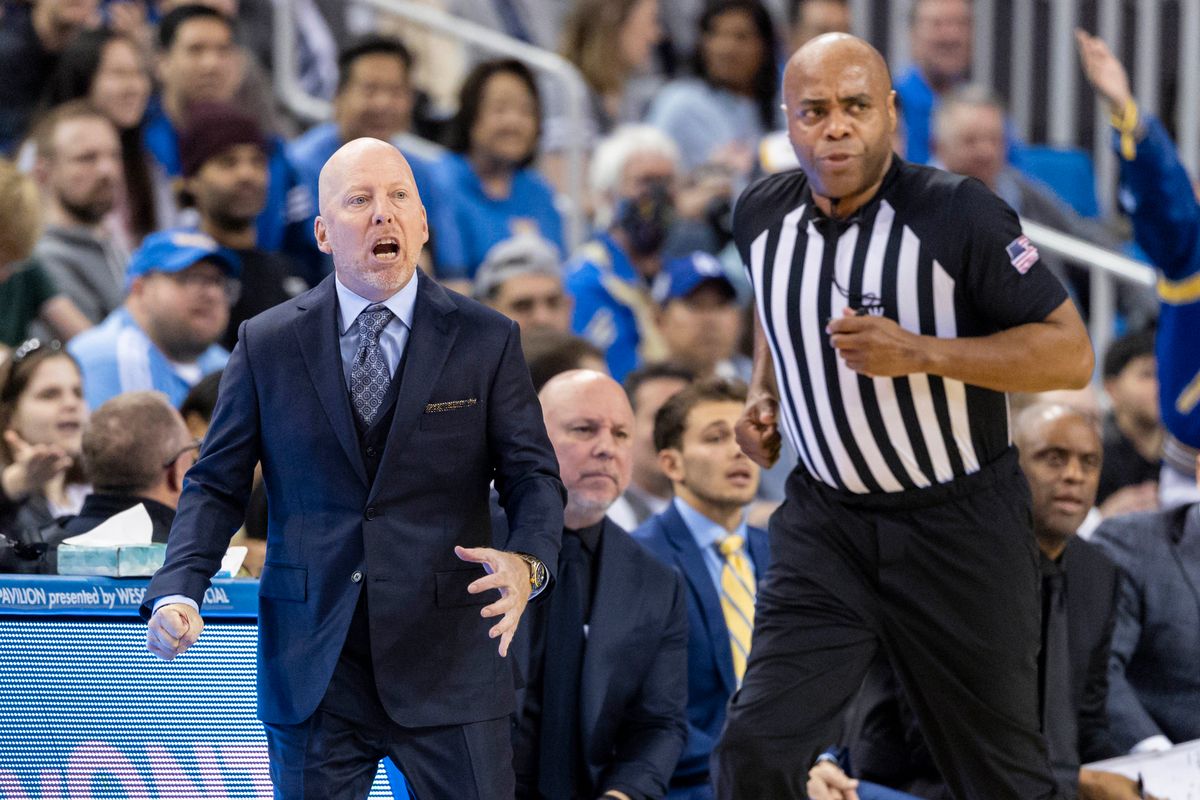
Jordan Teller - The Sporting Tribune
Head coach Mick Cronin of the UCLA Bruins yells at the referee during an NCAA basketball game against the Cal Poly Mustangs, Friday December 19, 2025 in Los Angeles, Calif.
While his demand from his players and his blunt honesty can be abrasive, it's also something that can bring out the best in the young men he coaches.
“People look at the way Coach says things, but it’s the actual words and the actual message that really matter and that’s what I’ve been taking from him,” junior forward Eric Dailey Jr. said during a March 10 media availability. “He don’t ask much from people. It might sound like a lot, but it’s really not. He asks you to show up with a good attitude and play hard. As long as you do that, you’ll be alright here.”
How Players Improve Under Cronin
Cronin’s methods, rough-edged as they may be, clearly translate into results. Across 23 seasons coaching at the NCAA level, he’s tallied over 500 wins, four conference tournament championships and as far as a trip to the Final Four.
His message may get lost in the airwaves at times, but the players under him have clearly learned to speak Cronin’s language and understand what he’s getting at.
“He can get on you, but everything he says he means it, like in a great, positive way. He just wants you to be a better person on the court and off the court, so you’ve just got to take it like that,” senior guard Donovan Dent said after beating USC.
Cronin’s talents as a coach aren’t just reflected in the win column, but in the impact that he makes on his players' game as well. He brings a Midwestern edge that stands in contrast at times to the vibes of Southern California, but that toughness is something that inevitably rubs off on his players as well.
A defense-first coach, Cronin’s emphasis on taking care of the ball hasn’t always been reflected in the way that the Bruins have played this season, but during their final stretch before the beginning of the Big Dance, his brand toughness has come across more clearly.
UCLA held their last seven opponents to less than 75 points, even in losses to Minnesota in the regular season and Purdue in the Big Ten Tournament semifinal.
“It’s time to enjoy the big dance and everything that comes with it.” 🏀@UCLAMBB coach Mick Cronin joined @PetrosAndMoney to talk about prepping his guys for the tournament. pic.twitter.com/Q2vw1DfTOU
— AM 570 LA Sports (@AM570LASports) March 17, 2026
“I’ve learned so much, especially in my basketball IQ. Toughness, defense, just learning the game overall. I’ve gotten so much better under him,” Bilodeau said.
“He’s been consistently on me, which is good. It’s what I needed,” Dailey Jr. added. “Before I got to college, I really didn’t play defense. Now that I’m here, at the most defensive school, with a defensive coach, my defense has gotten a lot better. That’s a credit to Coach for teaching me.”
A Humble Coaching Background
Coaching runs in Cronin’s blood. His father, Harold “Hep” Cronin, was a high school coach in Cincinnati with over 400 career wins under his belt.
Mick Cronin, too, got his start in coaching at the high school level, leading the freshman team and assisting with the varsity team at Woodward High School in Cincinnati, where he won three city championships across six seasons.
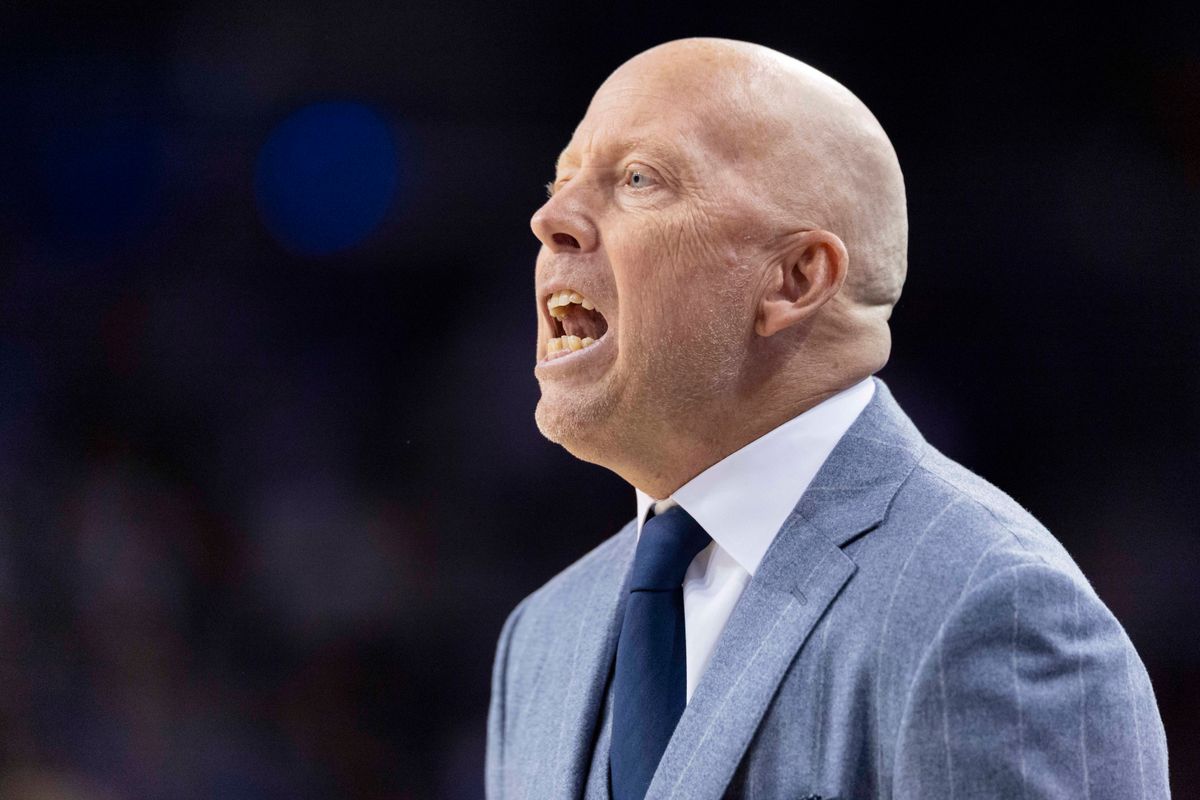
Jordan Teller - The Sporting Tribune
Head coach Mick Cronin of the UCLA Bruins yells from the sideline during an NCAA basketball game against the Nebraska Cornhuskers, Tuesday March 3, 2026 in Los Angeles, Calif.
Even if Cronin’s circumstances as a coach are different now, leading the most storied men’s basketball program in NCAA history with a multi-million dollar contract to keep him afloat, what he learned from his humble beginnings have never been lost on him.
“High school coaches don’t coach for money… $500 is what I made [as a high school coach],” Cronin said. “High school coaches, they coach because they love the game and they want to help young kids. That’s what I was taught coaching was for… Times have changed with the money. So does the responsibility. But, it doesn’t change who you are.”
It was his upbringing and experience coaching at the high school level that instilled Cronin’s passion, fiery as it is, in developing young players both in basketball and in life. How that passion translates into viral clips and sound bites is one thing, but the earnestness behind his words remains a constant.
“What you see on TV, no one knows who I really am,” Cronin said. “I try to stay focused on player development, and that is not all basketball… I get to spend a lot more time talking with these guys about why it’s important to listen and be coachable and have the right attitude and show up for work everyday ready to give your best effort. Because, they’re not going to be here forever.”
How exactly does Cronin place value in his players?
Cronin’s priority of “people over players” has shown up in a number of ways across this season.
Hidden amongst his rants about scheduling, start times and NIL influence has been his concern for how the changed college sports landscape will affect players after college, particularly for those that won’t have a professional basketball career after they graduate.
His complaints about an 8:00 pm start time for a game between UCLA and Nebraska on March 3 was based around his concern for how it would affect his players’ schooling.
In a similar vein, his general distaste for how the transfer portal operates and the constant team-hopping it promotes isn’t focused just on how it changes basketball, but how it can set up players for failure in the professional world.
I want to post this clip of Mick Cronin talking about game start times and the transfer portal in its entirety. Cronin finds himself going viral often, but he also makes it clear again and again that his concern is with his players’ futures first and foremost pic.twitter.com/O9zGqga4Ul
— Jack Haslett (@JackHaslett_13) March 4, 2026
“Guys need jobs when they’re 27 and they’re done playing in Europe… They have no resume, because they’ve been playing basketball. Now, these kids aren’t going to have degrees that are transferring three, four times. So, we’ve got to do everything we can,” Cronin said after UCLA’s win over Nebraska.
Another example was after UCLA’s win over Michigan State in the Big Ten Tournament. Bilodeau went down with a knee injury in that game and in that postgame conference, when asked about his status, Cronin jumped straight to his concern for Bilodeau’s injury as a person before he was concerned about what they would lose on the court.
A day may not go by where a new Cronin clip, rant, or soundbite isn’t making its way across the internet, but to those that know him best, his players especially, the coarseness of his delivery conceals an investment in his team and a passion for the game that runs so deep it at times lashes out amidst the shortcomings he sees.
“I believe that ‘Coach’ is a sacred term and it means you care about your players and you’re going to spend a lot of time trying to help young people be adults, because it’s a tough world,” Cronin said.