
League of Legends North American League Championship Series commissioner Mark Zimmerman watched Split 1, knowing the format would leave things unresolved.
"Some teams like Shopify going 0-6 was a shock to me," he said. "Now they have more time in NA, more time with their team, and a seven-week season versus 0-6 and you're out."
Split 1 was a short sprint from start to finish – a Swiss-style format in which teams played as few as three matches before playoffs. Split 2 opens Saturday, kicking off a seven-week regular season before a three-week playoff that will decide who will represent the region in Korea for the Mid-Season Invitational.
Here are the five questions that will define it.
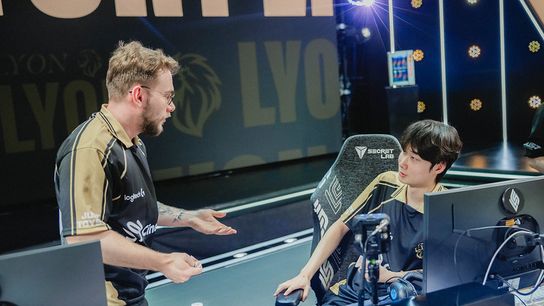
1. Can anyone close the gap on LYON?
RIOT Games
Fans new to League of Legends in North America should start here because every other conversation does.
LYON struggled for consistency during Split 1’s Swiss stage. The team rallied, winning four matches in the lower bracket to raise the trophy and book a trip to the first international event in Brazil.
LYON went 1-2 in Brazil, but extra games against competition from Korea and China provided LYON with more time together to improve.
Kang "Saint" Sung-in, LYON’s mid laner, was direct about where his team stands relative to the other teams, considering they got extra games to figure out flaws.
"If we fix our problems, there's no reason we should be losing to these LCS teams," Kang said.
LYON will be expected to be one of the teams that arrive in Korea in late June, but they’re not completely infallible. But how wide is the gap right now?
Tanner "Damonte" Damonte, assistant coach of Shopify Rebellion, had the clearest answer.
"Inspired might be the most commanding voice in LCS history," Damonte said, referring to LYON jungler Kacper "Inspired" Słoma. "When you watch their voice comms, you can hear him setting up team fights 45 seconds in advance. Having that is incredibly powerful when your whole team runs through one person."
Not every team is built that way – or wants to be. For Team Liquid Alienware, the answer to LYON's one-voice system is collective decision-making.
"We just all talk about what we can do," said Jo "CoreJJ" Yong-in of Team Liquid. "We bring up what each person sees. It's really hard for one person to hold everything."
Nicholas "Inero" Smith, head coach of Cloud9 Kia – who finished second to Lyon in Split 1 – pushed back on the idea that the gap is a moving target that may never lose.
"I don't feel like we're that far from LYON," Smith said. "In some moments we just threw games that should have been completely free for us."
A seven-week regular season is still seven weeks of evidence. Either the gap shrinks, or it doesn’t.
2. What does a faster, more unforgiving game mean for NA?
Stefan Wisnoski / RIOT Games
The meta did not wait for teams to catch up.
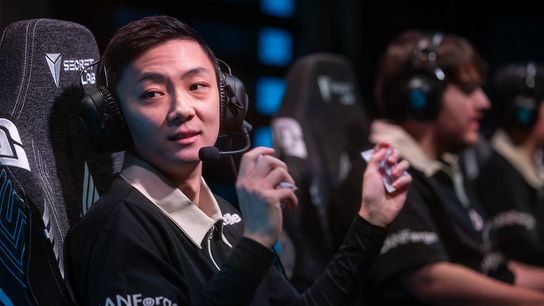
Developers introduced a new mechanic, Role Quest, that rewards early lane dominance. This combined with enchanter-heavy support picks to make the first six minutes of a game more consequential than they have been in years. Teams that do not convert early advantages are finding those advantages to evaporate fast.
The change was intentional. Matthew Leung-Harrison, Riot Games' lead gameplay designer, said the 2025 version of pro play had become predictable to the point of staleness.
"Pro play was heavily dominated by teams just chaining objectives: dragon into grubs into Rift Herald into another dragon into Baron," Leung-Harrison said. "The game played out very similarly every time and got stale. We wanted to add more strategic richness back, and role quests were the vehicle for that."
LYON’s experience at First Stand offered North America's closest look at what that gap actually feels like. Kang came away with a complicated read.
"There are a lot of problems for us," Kang said. "But we could feel the international matchups aren't as unwinnable as we expected. We had the ability to compete against LPL and LCK teams."
Damonte was more specific.
"Early game is very snowball-heavy right now, especially in jungle and bot lane," he said. "By six, seven, eight minutes, one team usually has a clear, significant advantage."
Victor “FBI” Huang pointed to the First Stand finals as the example North American teams should be studying. Bilibili Gaming's attack-damage carry (bottom laner), Park "Viper" Do-hyeon, stayed disciplined throughout a series BLG trailed in multiple games.
"BLG was down in a lot of those games, but Viper kept himself in good positions, rarely got caught, and they were able to come back in Game 5," Huang said. "Staying consistent gives your team options."
The question for NA teams is whether they have practiced enough early-game discipline to compete in that environment and whether a seven-week regular season is enough time to find out.
3. Are the rookies for real?
RIOT Games
Split 1 produced an unexpected answer as to whether the rookies can compete: yes, mostly.
Cho "Castle" Hyeon-seong, a second-year top laner for Disguised, played alongside two first-year LCS players – AD carry Sajed "Sajed" Ziade and jungler Christian "KryRa" Rahaian – and came away genuinely surprised.
"I didn't feel like they were rookies in the game at all," Cho said, who also played with rookie jungler James “Kisno” Woo for the first two weeks of the season. "The only moments I see rookie behavior is out of game. But in game, it feels like playing with guys who've had two or three years in the LCS."
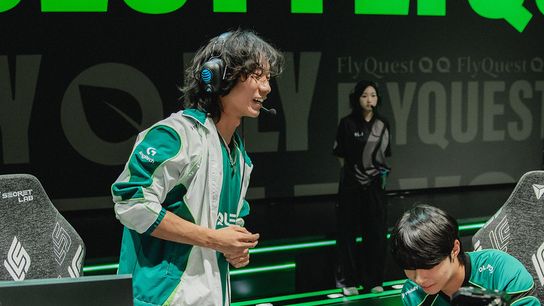
İbrahim "Gakgos" Bulut of FlyQuest saw something similar in Johnson "Gryffinn" Le, his team’s rookie jungler. Bulut played alongside Słoma last season in short spurts as a substitute, but he, too, is in his first full season as a team member. He was careful not to overclaim, but the comparison naturally came.
"They both care about the game a lot," Bulut said. "When there’s a mistake, they don’t just move on. Gryffinn really cares. That reminds me of Inspired."
Zimmerman offered important context. The lightning-fast Swiss format that made Split 1 an accelerated environment for rookies in one specific way: it forced them into playoff pressure immediately.
"Gryffinn had a great first three weeks," Zimmerman said. "People were like, ‘Whoa, this kid’s really good.’ And then, how do we stop him? That looks very different when people are game planning against you."
Veterans and experience eventually won out as the more experienced teams ended up finishing first, second, and fourth. The only team that broke the preseason top three was Sentinels, but the team had an experienced top laner (Eon-Young “Impact” Jeong) and three players who were apart of a stressful relegation battle at the end of last season.
Split 2 will be a real test for the rookies. Opponents have film and more knowledge of champion pools and player tendencies. Veterans are making adjustments, so it’s time for the rookies to sink or swim.
4. Does a longer split change everything?
RIOT Games
Ask the teams and they will tell you: yes, and planning for more matches already has made a difference.
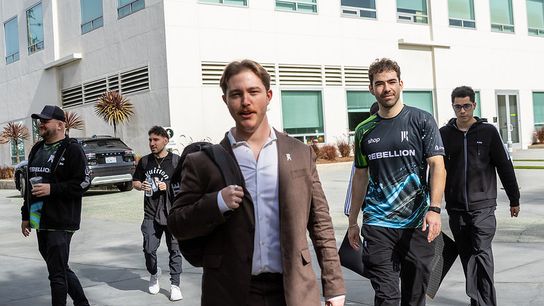
Split 1 gave teams three matches on stage, minimum. For teams like Dignitas and Shopify Rebellion, they missed the postseason, meaning their season ended after three weeks. Three matches are not enough to build anything meaningful and are barely sufficient to identify areas of strength and weakness.
"In Split 1 there was very little friction," Damonte said. "We got along well, we were enjoying ourselves. But as a team, we needed that friction to push us forward. We were too comfortable. We could have accelerated our growth much faster."
Seven weeks for a regular season changes the math. Teams can set weekly goals, test new approaches, make mistakes and correct them before the mistakes become habits. The band-aids come off and over the course of a 10-week split teams will look different than how they started.
"It's a much better training environment," Damonte said. "It's not just band-aiding this and band-aiding that."
For FlyQuest, the longer format carries particular weight. The team spent the split break on a boot camp in Korea, and Bulut returned feeling the difference immediately.
"Last split was a bit of a warmup," Bulut said. "This split will be more real for us."
Zimmerman framed the stakes from a league perspective. Two teams from NA will qualify for MSI, meaning there is more to play for beyond just winning the split.
"It gives you a little less feast or famine," Zimmerman said. "You don't just win and go or lose and stay home. Having more outcomes than that is a really big deal."
5. Is the top two set, or is there still a race?
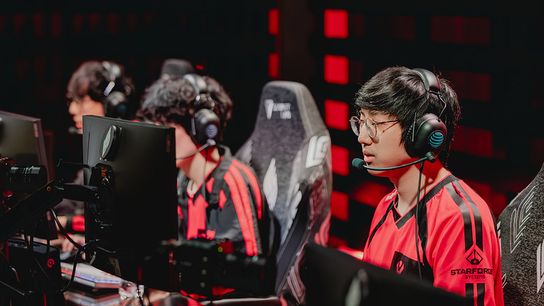
Christian Betancourt / RIOT Games
Cloud9, Team Liquid, and LYON enter Split 2 as the perceived top three. Only two of them go to MSI. That math creates pressure and opportunity.
LYON is the defending Split 1 champion and the favorite. The question is which of the two teams behind them grabs the second spot, and whether anyone outside that group can break in.
Smith at Cloud9 was direct about his team's standing.
"I still think it's TL, us, and Lyon as the real top tier," he said. "It would be nice to see someone challenge that, but right now I don't think the field is there yet."
Damonte was more open to the possibility of disruption.
"I don't think the gap is huge between the bottom teams and the top teams," he said. "But right now the biggest gap in LCS is team fight preparation – and that's where games are won and lost."
Huang was honest about where his team stands.
"We're still quite far," he said. "There's a lot we need to work on. But it's been easy working with everyone, and as long as we keep progressing, I think we'll have a good shot."
Chou kept his eyes on the same horizon.
"If we can keep improving, we'll definitely want to play against better and better opponents," Chou said.
Jo was more pointed. He watched the First Stand tournament from home knowing his team should have been there.
"I was very jealous watching [European team] G2 doing well," Jo said. "I wanted to perform well in one of those tournaments. The next one is MSI. I will make sure we get there."
Paul Delos Santos covers esports for The Sporting Tribune and publishes Inside Esports, a newsletter covering the esports at insideesports.media.