
One of the first off-the-field pieces of debate surrounds jersey design. Fans will argue about which team has the best looks and designs for domestic competitions. But once it becomes a global event, the stakes are higher as fans try to analyze every detail on a jersey to extrude some type of symbolic meaning.
The Esports Foundation knew this and wanted to avoid making a poor first impression. So they opted to partner with a leading athletic brand to design and produce jerseys for their first-ever Esports Nations Cup, which is set to take place in November in Riyadh, Saudi Arabia.
The Esports Foundation and adidas joined forces to make the athletic clothing company the exclusive apparel outfitter of the Esports Nations Cup. They debuted the France National Team jersey on Sunday, and the rollout of national team jerseys will continue throughout the year.
But for the Esports Foundation, it was vital for the team to create jerseys that have a larger appeal.
“Obviously, when you have a big national team-based competition, like the Esports Nations Cup, the jersey plays a very important role because it’s visually the first thing you see that represents the nation,” Esports Foundation chief commercial officer Mohammad Al Nimer said.
The Natural Fit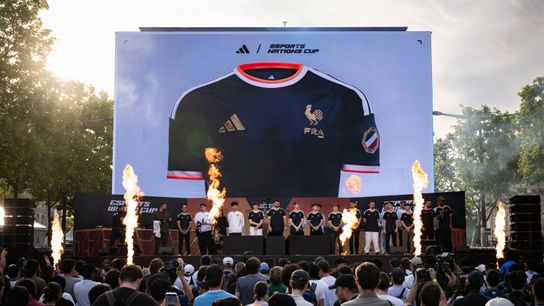
The international competition space isn’t new to adidas. They’ve made apparel for just about every global event, and senior vice president of brand development Phillip Waller figured that esports also fits that same mold.
“For decades, adidas has been present at major sports competitions where the world comes together,” he said. “There is an incredible cultural energy in esports and gaming. We acknowledge it, we feel it – and we want to be part of this incredible milestone.”
Now, the apparel market is filled with brands that could have taken on this project, and Al Nimer said the organization remains in constant contact with them regarding partnership deals, adding that when they met with adidas, it was as a “natural fit.”
“We felt that their vision was very close to ours in terms of what this jersey needed to represent and how it needed to look like,” Al Nimer said.
Adidas developed football (soccer) national kit designs for Spain, Japan, Belgium, and Mexico. Waller credits this experience as one of the biggest reasons why they’re able to create unique looks for more than 100 nations.
Esports jerseys, however, tend to resemble soccer kits from material, along with look and feel, making it an easy conversion in some respects.
“The challenge was creating a jersey that feels authentic to esports and deliver the credibility and performance expected of a national team kit,” he said. “We developed a distinct identity that captures the energy of esports while remaining unmistakably adidas.”
The design and creation process continues with most Tier 1 nations (nations with the most title entries) receiving their designs. The France National Team jersey was revealed Sunday, and more nations will follow in the coming months before the event.
“It was a lot of back and forth,” Al Nimer said. “[It was] a lot of work with the designers but also testing those jerseys with people who come from those different countries to make sure that we are culturally relevant and locally relevant for each one of those countries.”
There was another challenge, though: the hurried timeline that came with planning the Esports Nations Cup.
A Sprint, Not a Marathon
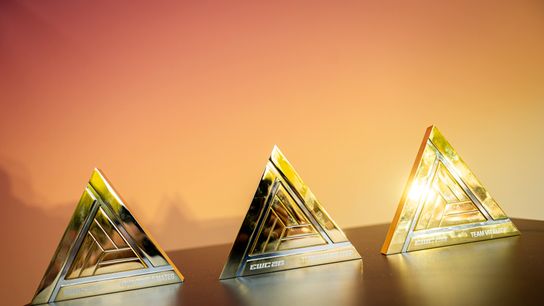
While international esports events between countries have existed and been hosted by other organizations, few – if any – have reached the scale that the Esports Foundation has attempted. The event will feature 16 titles with more than 100 countries attempting to qualify for the event.
The Esports Foundation aims to create a similar environment to an Olympic Games with a highly condensed timeline – a little more than two years after the Olympics agreed to partner with the Saudi Arabian National Olympic Committee to host an IOC-regulated esports Olympics. The deal fell through, however, due to a variety of factors. The Esports Advocate noted leadership changes and philosophical differences.
In the wake of the collapsed agreement, the Esports Foundation, which had just finished hosting the Esports World Cup in 2025, announced the Esports Nations Cup on Aug. 23, 2025. The event will take place every two years, with the first iteration planned for November 2026.
The announcement came with logistical challenges from finding national team partners, team selection, and titles. One of the lesser but still valuable things on the list: jerseys and athletic gear.
Esports Foundation chief operating officer and deputy CEO Mike McCabe, who previously worked with Nike, recalled the process of developing specialized kits for international teams for World Cups and the challenges facing the team when asked about it in March.
“The design cycle is four years plus for those national team kits,” McCabe said. “We didn’t have that long.”
Waller said the team has been working on the project for close to a year.
“It was a significant challenge for our team, but this is an incredibly exciting opportunity for us as a brand,” he said. “These jerseys will become a symbol of incredible moments that both athletes and fans will remember for life.”
The creation of official national apparel gives fans a tangible item to buy that isn’t tied solely to gaming, which can prove important to the larger picture.
Selling the Unsellable
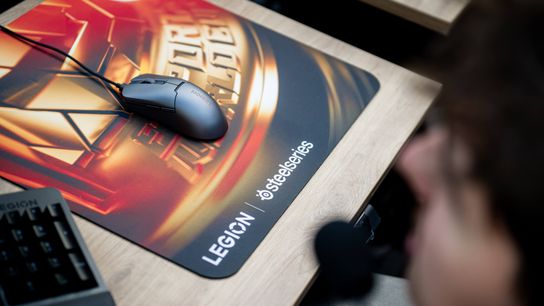
Most esports merchandise is purely for the purpose of playing. Gaming mice, chairs, and keyboards with specific switches are the heart and soul of esports, but for fans, it’s the equivalent of buying a specific brand of hockey stick, baseball bat, or gloves.
“When I was a kid, oh, so-and-so was wearing this Rawlings glove. I wanted that Rawlings glove,” sports media consultant and attorney Bobby Hacker said. “You have the same thing going on [in esports], but it’s a much smaller market to buy that controller or to have that gaming chair.”
Esports lacks apparel that owns a crossover appeal and ability to wear things outside of competition. Basketball shoes have both a collector and a functional side – rare drops with colors and designs are collected, while base colors like black are used functionally.
But jerseys in esports don’t have recognizable identifiers that make them stand out to the public. So, adidas is trying to create jerseys that represent nations with esports feel.
“It was our intention to create something excitingly different from any other sport category,” Waller said. “We cannot wait for the athletes and fans to see the jerseys when they are revealed.”
The hope is that jerseys with national team colors, designs, and crests draw fans into exploring esports further.
“What we want to achieve is to make esports the biggest sport in the world, to take it more mainstream, to attract new audiences,” Al Nimer said. “For us to do that through the jersey, we needed a jersey that even a non-esports fan would find super cool and would want to buy and would want to wear on a regular basis.”
But how do you make jerseys for more than 100 countries look and feel unique?
Designing for the World
It’s hard to make a jersey one of a kind. But doing it for a large swath of nations comes with a whole set of issues.
Thankfully, esports has a baseline look. Often with few exceptions, esports jerseys showcase the silhouette of a football jersey. It’s also mandatory to have a look and feel like an athletic jersey, if they want to shift the perception of an esports professional to go from nonathlete to athlete.
“Players are real athletes and this needs to be become one of the biggest sports in the world,” Al Nimer said. “We also wanted the players to be comfortable wearing it and for this to be easy to wear on stage and for them to be proud wearing it most importantly and culturally relevant across as many nations as possible.”
While a nation’s colors are the standard default scheme, it’s how they are incorporated that ultimately makes the difference. Some nations will feature a variation of a pattern using the colors, like how Germany’s 2026 World Cup kit looked.
But using the nation’s flag and its colors as the primary color isn’t the only thing that the country can take influence from. It can also include references woven into the jersey, such as the use of Quetzalcoatl and other elements from the Aztec culture.
Every country has these identifiers, and Waller said adidas is focused on making sure they represent more than being from a country.
“We also wanted these jerseys to feel just as relevant beyond competition,” Waller said. “Something fans would want to wear because it represents who they support, where they come from, and the culture they belong to.”
But while large nations, such as the United States, Korea, and Mexico, have key iconography and design elements that make them distinctly their own, it’s the smaller, lesser-known nations that have been a rewarding challenge for the team.
Al Nimer said the team looked at traditional clothing, cultural colors and city elements, and other subtle homages to bring forth a real, culturally relevant jersey.
“We really try to draw inspiration from different elements for each one of the countries, and try to make sure, as much as possible, that it’s a fair representation of that country and of that culture,” Al Nimer said. “We’ve actually enjoyed the process a lot, to be honest with you.”
Al Nimer asked fans to show a little temperance regarding every jersey. Because of the time crunch, teams weren’t given any input on the design or whether there was a cultural symbol missing from it.
“Some fans will be super ecstatic about their country’s journey,” he said. “Others will want to challenge it and so on.”
When it came to France’s national team jersey, national team manager Bora “YellOwStaR” Kim said national unity and pride were a “non-negotiable.”
Blue, White, and Pixelated
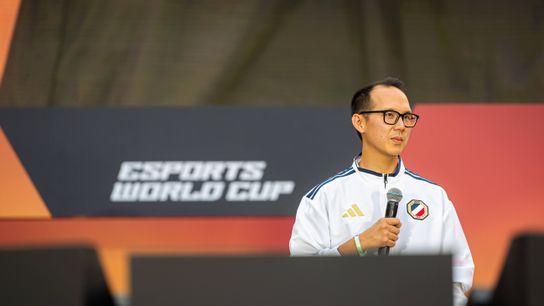
France’s esports scene is as rabid and loyal as any football club in the nation.
French clubs, such as Karmine Corp. and Team Vitality, have fans arriving to venues to cheer on their various teams, from the high-stakes League of Legends event to the lesser-known Mobile Legends: Bang Bang Women’s Invitational.
But when it came to the design of the French national team jersey, it was necessary for the kit to bring those rival clubs together under a unified brand.
“The goal was to create a jersey that genuinely feels French. That meant finding the right balance between elegance and performance: two qualities that have defined French esports,” Kim said. “Whether you’re a player or a fan, wearing the jersey should be a source of pride and a symbol of the passion and ambition.”
The French jersey, on the surface, takes influence from the France National Team football jersey. The iconic blue with the Gallic rooster appears, but the pixelized rooster fuses the traditional and esports worlds together.
“We wanted to make sure that the jersey is recognizable from a national team perspective for the French fans, but also that is very cool and very unique,” Al Nimer said. “We needed for this jersey to be purely French, unmistakably French. But also, it’s a cool jersey that I’m sure fans will want to wear.”
With the jersey out for all eyes to see, Kim stressed the second – and probably more important – part of having the jersey.
“A national team jersey helps build that legacy. It gives players and our community the opportunity to represent their country on the biggest international stage,” Kim said. “Together with our players and fans, we’ll create unforgettable moments and inspire the next generation to dream of wearing the French jersey.”
France won’t be the only nation with this desire. There will be more than 100 others ready to do the same.
More Than Fabric
Al Nimer feels a larger connection to the jerseys beyond being one of the key participants. He understands what it means to have a jersey of his nation and culture represented in a piece of clothing.
He admitted to wanting to buy quite a few of them, but as a Jordanian-Frenchman, those are the two he most looks forward to wearing.
“The closest to my heart are the ones that represent me,” Al Nimer said.
But that is the connection Al Nimer, Waller and their organizations are trying to build. They’re trying to build an esports jersey that people can wear and feel a sense of connection to, and in essence, that’s what jerseys are.
They’re a symbol of love for a club, team, or national team/culture.
Jerseys won’t be the only thing that adidas produces for the Esports Nations Cup. As the official and exclusive partner, there will be other types of gear that fans can buy.
But it all starts with the jersey, which will receive the same amount of airtime as the players, which is why a premium should be placed on how they look.
“When you build that jersey for more than 100 nations, you need to make sure that you maintain the integrity of that visual representation of each one of those nations,” Al Nimer said. “[So], you can make sure that the fans relate to the cultural elements in that jersey in relation to the country, the territory or the nation.”
The challenge was to do it more than 100 times.
It’s no longer in the designers’ hands, however. Instead, it will move to the crucible of fan hot takes and arguments on which jerseys are great and which should go back to the drawing board.
If nothing else, it’s another step forward in esports’ journey to be like its traditional sports sibling.
Paul Delos Santos is the host of The Load-In, an esports editorial channel that treats fandom, labor, and identity in competitive gaming with the same rigor modern sports journalism gives every other sport. Follow his YouTube channel at youtube.com/@TheLoad-InGG.