
LOS ANGELES — Kyren Williams spends his Sundays reading blocks, finding cutback lanes and, inevitably, taking hits. Lots of them.
So the Rams running back is adding a layer of protection this season — not for his knees or ribs, but for his brain.
Williams joined Q-Collar as an official ambassador on Thursday, becoming the latest NFL player to wear the company's FDA-cleared neck device. The collar applies light pressure to the jugular vein, increasing blood volume in the skull and limiting the brain's slosh during head impacts.
The science, according to the company, is significant. Twenty-five peer-reviewed studies back the technology, and Q30 Innovations says the collar shows a 66 percent reduction in the likelihood of brain damage over a contact-sports season.
For a running back entering his fifth year, that math hits close to home.
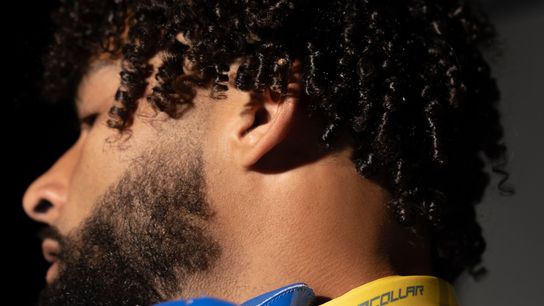
Courtesy of Q-Collar
"The goal as a running back is to evade contact, but we all know that's not entirely possible," Williams said. "Q-Collar allows me to play fast and strong when hitting holes and acts as an added layer of protection for my brain health and safety as I get hit throughout the season."
Williams isn't a fringe player testing out new gadgets. He has rushed for more than 1,100 yards in each of the last three seasons, scoring 44 touchdowns over that span for a Rams offense that led the league in scoring in 2025.
Tom Hoey, CEO and co-founder of Q30 Innovations, said Williams embodied the blend of performance and preparation the company looks for in its partners.
"As conversations around brain health continue to evolve across sports, athletes like Kyren are helping lead the way by showing that protecting your future and maximizing your performance are not competing priorities," Hoey said. "They go hand in hand."
Dr. Julian Bailes, the company's chief medical advisor and a chair of neurosurgery at Endeavor Health, has spent decades studying head trauma. He views the collar as a cultural shift as much as a medical one.
"Protecting the brain should be viewed as an essential part of athletic preparation and longevity, just like strength training, conditioning and recovery," Bailes said. "The future of sports depends not only on helping athletes perform at their best, but on helping them stay healthy long after their playing careers have ended."
The St. Louis native and former Notre Dame back joins a growing list of Q-Collar athletes that includes Indianapolis cornerback Sauce Gardner, Buffalo tight end Dalton Kincaid and Titans running back Tony Pollard, along with a handful of college stars.
The device has been FDA-authorized since February 2021 and launched in the U.S. later that year. It is now worn across football, lacrosse, soccer, winter sports and by members of the armed forces.
Williams will wear the collar during practices and games this fall, and he'll also appear in marketing campaigns promoting brain health.
For a player who has built a career on running through tackles, the collar offers something the stat sheet doesn't track. A future.