
INGLEWOOD, Calif. — No. 22 UCLA beat No. 14 Gonzaga in the West Coast Hoops Showdown, 65-62, at Intuit Dome.
For the fifth season in a row, Gonzaga and UCLA squared off in this newly formed rivalry, which has been one-sided with Gonzaga winning the previous four matchups.
However, UCLA turned the tides after stealing a nail-biting victory to improve to 11-2 on the season and will likely jump in the rankings.
There were three areas where UCLA executed well enough to knock off the Gonzaga.
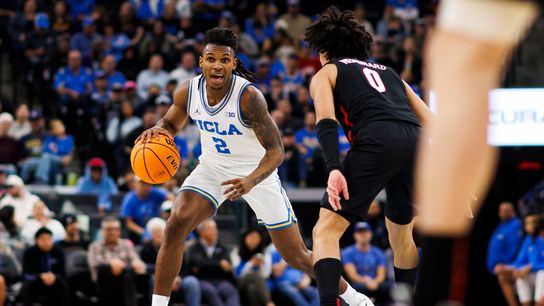
Ric Tapia - The Sporting Tribune
Dylan Andrews #2 of the UCLA Bruins dribbles the ball during the first half against Gonzaga Bulldogs at Intuit Dome on December 28, 2024 in Inglewood, California.
UCLA scored off turnovers
One of the strongest traits of the UCLA defense this season has been forcing turnovers. The Bruins average 18.4 turnovers forced per game, which is second in the nation.
UCLA caused Gonzaga to turn the ball over 15 times. Although this amount is lower than UCLA’s average, it was still effective in rattling the Bulldogs offense.
The Bulldogs only average 9.8 turnovers on the season which is top 25 in fewest turnovers per game. This showed how the Bruins were able to force mistakes from an offense that takes care of the ball.
These 15 turnovers from Gonzaga resulted in 18 points for the Bruins. In comparison, Gonzaga only collected 8 points on UCLA turnovers.
In a low-scoring game where every possession mattered, UCLA maximized on the Gonzaga turnovers. On the other hand, the Bulldogs couldn’t capitalize on these opportunities.
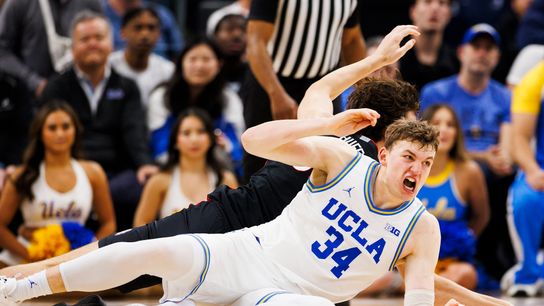
Ric Tapia - The Sporting Tribune
Tyler Bilodeau #34 of the UCLA Bruins dives for the ball during the second half against Gonzaga Bulldogs at Intuit Dome on December 28, 2024 in Inglewood, California.
Bruins ball movement
Ball movement played a huge role for UCLA and was able to go toe to toe with Gonzaga’s offense.
To match Gonzaga’s constant cutting and off-ball movement, UCLA kept the offense flowing.
“We say keep the music going. What that means is don’t hold the ball. You got to keep it going,” said Dylan Andrews. “No matter if you get stuck in the offense or if the offensive play we ran didn't work, always keep the music going.”
Gonzaga ranks sixth in most assists per game while UCLA is just outside the top 50.
However, in this game, UCLA nearly matched Gonzaga in assists. The Bulldogs managed to have 17 assists while UCLA tallied 16.
Gonzaga has one of the most efficient offenses in the country due to their movement. To keep pace with an effective offense, UCLA was able to match their motion.
This allowed UCLA to generate enough efficient shots to withstand the Bulldogs' defense.
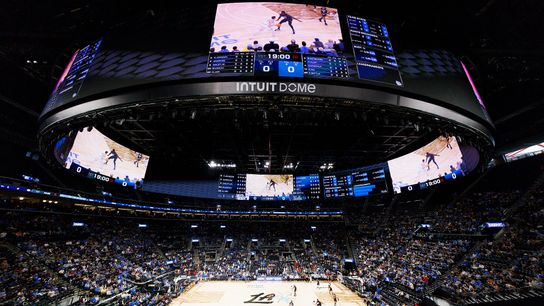
Ric Tapia - The Sporting Tribune
A general view of the stadium during the first half between Gonzaga Bulldogs and UCLA Bruins at Intuit Dome on December 28, 2024 in Inglewood, California.
Three-point disparity
UCLA struggled to score at the rim as they only registered 8 points in the paint.
The inside scoring was the biggest asset to Gonzaga but UCLA combated this with three pointers.
From three pointers, UCLA made 12/24 attempts. Gonzaga only made 7/24 of their attempts. The 50% three-point shooting by the Bruins was higher than their 36% field goal shooting.
There were only 8 field goals made from UCLA within the two point range. This means that 60% of the Bruins offensive production came from behind the three point line.
Gonzaga's interior defense closed down the paint which resulted in UCLA needing to space the floor and find more open shots from further range.
Although UCLA forced this game into a low-scoring affair, the 15 more points the Bruins obtained from three pointers were vital. The Bruins outlasted the tough Gonzaga defense by finding better shot selection from three.